
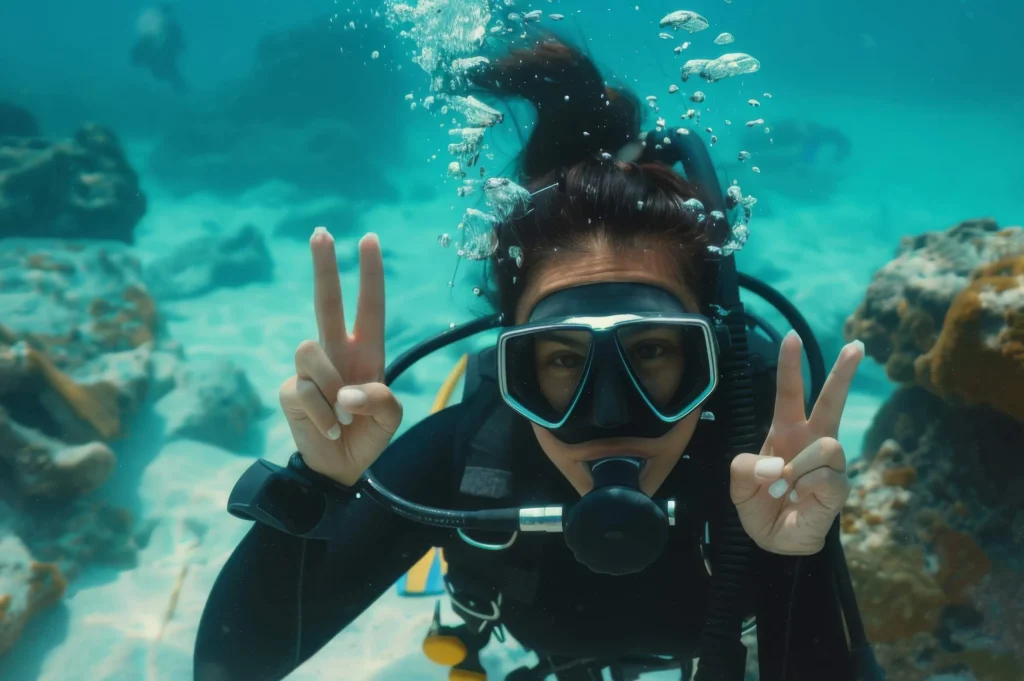
The importance of buoyancy control in diving
Buoyancy control in diving is an essential skill that every diver must master. In this article, we will explore how to perfect this technique with the secrets of Advanced Buoyancy Control for a safe and comfortable underwater experience.
Benefits of Good Buoyancy Control
Mastering buoyancy in diving allows you to:
- Save air and energy, extending your dives.
- Improve your stability and maneuverability, making underwater exploration easier.
- Reduce your impact on the ecosystem by avoiding contact with or damage to corals and marine life
- Feel more comfortable and safe, reducing fatigue and unnecessary effort.
Techniques to Improve Buoyancy in Diving
Adjust your weights properly
Carrying too much or too little weight affects your buoyancy. A good starting point is to perform a buoyancy check before each dive if you don’t remember how much weight you used last time. Follow this method:
- On the surface, with an empty BCD and breathing normally, you should float at eye level.
- When you exhale completely, you should begin to sink slowly.
Use your breathing as a control tool
Breathing is key to buoyancy in diving. When you inhale, you will float slightly, and when you exhale, you will descend in a controlled manner. Practice controlling your breathing to avoid sudden movements.
Learn to manage the Buoyancy Control Device (BCD)
Good management of the Buoyancy Control Device (BCD) will allow you to make precise adjustments. Use small amounts of air to fine-tune your position and avoid constantly inflating or deflating it.
Maintain a hydrodynamic position
Keeping your body in a horizontal position helps reduce water resistance and improves movement control. Additionally, it prevents excessive finning, contributing to better air conservation while diving.
Practice with specific exercises
To improve your buoyancy control in diving, try exercises such as:
- Hovering: Stay suspended in one spot without moving.
- Buoyancy control in motion: Practice controlled ascents and descents without touching the bottom.
- Breathing exercises: Learn to control your buoyancy using only your breath.
Ready to perfect your buoyancy?
At Spot Diving, we offer advanced diving courses in Cartagena to take your skills to the next level. Contact us and dive into the adventure with safety and confidence.
-
 Write to us and book your next dive:
 Write to us and book your next dive:
Tik Tok